WHAT ARE YOU LOOKING FOR?
Popular Tags


News
03 September 2026
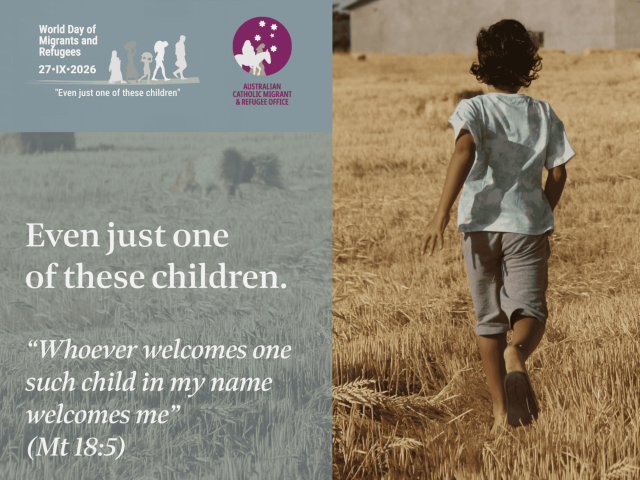
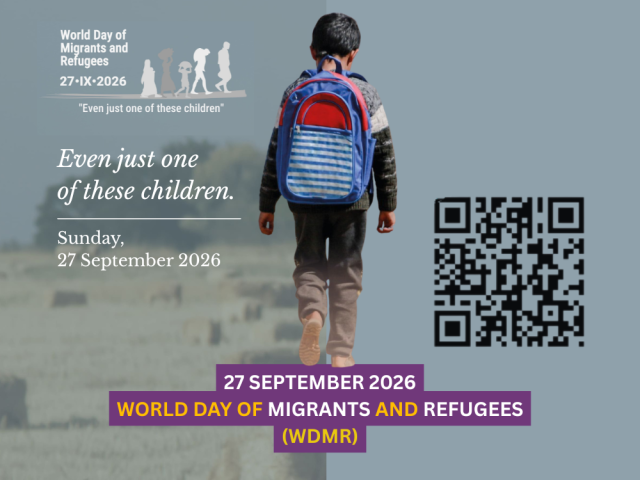
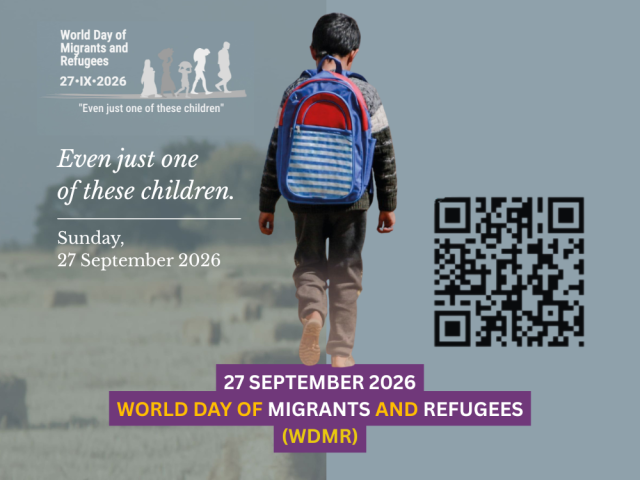
Children and youth will be the focus of the 112th World Day of Migrants and Refugees on September 27.
To help parishes, schools and Catholic communities mark the occasion, the Australian Catholic Migrant and Refugee Office (ACMRO) has published a set of resources online.
This year's theme, "Even just one of these children" (Matthew 18:10), draws attention to children and young people affected by migration and forced displacement, inviting Catholics and all people of goodwill to recognise their dignity, hear their stories and respond with compassion and solidarity.
In his message for the World Day, Pope Leo XIV highlights the vulnerability of children on the move, noting that "minors are the most vulnerable group within the global movements of migration" and that they are "concrete faces, who have unique stories, and call on our conscience",
The Holy Father reminds us that behind migration statistics are children whose lives have been shaped by war, poverty, violence, environmental disasters and family separation.
At the same time, he points to signs of hope in the witness of families, educators, volunteers and faith communities who accompany and support young migrants and refugees.
Reflecting on the Pope's message, Archbishop Christopher Prowse, Chair of the Bishops Commission for Evangelisation, Laity and Ministry (BCELM) and Bishop Delegate for the ACMRO, said the theme challenges Australians to pay closer attention to a frequently overlooked dimension of migration.
"We frequently hear the voices and experiences of adult migrants and refugees, but we tend to forget the children involved," Archbishop Prowse said.
"The Holy Father is inviting us to reflect on the often unseen and unspoken experiences of children who journey alongside their families or who face displacement on their own."
Archbishop Prowse noted that while migrant and refugee children are often invisible and voiceless, they remain at the centre of the Church's concern.
"Our responsibility in our communities and in Australia in general is to go out of our way to be attentive to this often invisible and voiceless dimension of migrants and refugees" Archbishop Prowse said.
ACMRO National Director Fr Khalid Marogi encouraged Catholic communities throughout Australia to use these resources in the lead-up to and during the World Day of Migrants and Refugees, and to pray especially for children and families affected by displacement around the world.
Resources are available at: https://acmro.catholic.org.au/wdmr/2026
03 September 2026
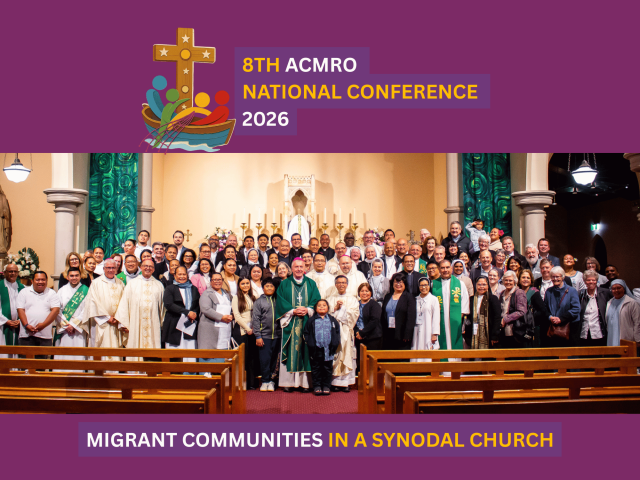
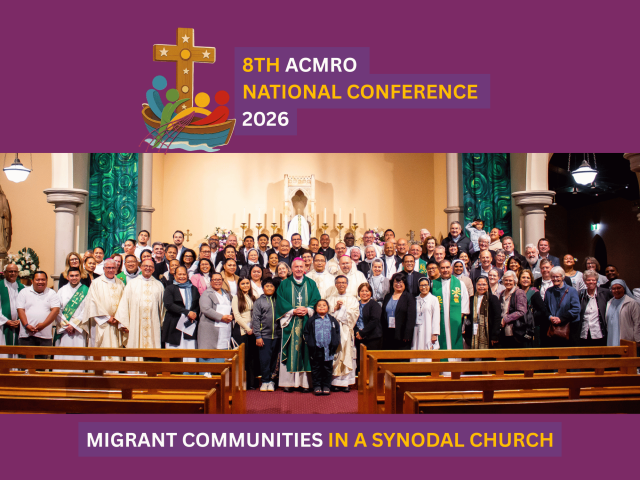
Almost 100 delegates from across Australia gathered at Mary MacKillop Place in North Sydney from 25-26 August 2026 for the 8th Australian Catholic Migrant and Refugee Office National Conference.
Attendees reflected on the theme "Migrant Communities in a Synodal Church" and exploring how migrant communities serve as evangelisers and missionaries of hope within the Church and the broader Australian community.
The conference brought together bishops, clergy, religious, pastoral workers, migrant chaplaincies, community leaders and lay representatives from diverse cultural backgrounds. The program featured keynote presentations by Cardinal Fabio Baggio, Under-Secretary of the Dicastery for Promoting Integral Human Development; Dr Trudy Dantis, Director of the National Centre for Pastoral Research; and Bishop George Kolodziej SDS, Bishop of Bunbury.
Over two days, participants engaged in prayer, keynote presentations, dialogue and Conversations in the Spirit, focusing on the contributions of migrant communities to the life, mission and future of the Catholic Church in Australia.
In his closing remarks, Archbishop Christopher Prowse, Chair of the Bishops Commission for Evangelisation, Laity and Ministry (BCELM) and Bishop Delegate for ACMRO, emphasised the importance of recognising migrant communities as active participants in the Church's mission.
"This conference has highlighted the extraordinary gift that migrant communities bring to the Church in Australia.”
“Their faith, traditions, cultural heritage and missionary spirit continue to enrich our parishes and communities, helping us become a more synodal Church that listens, welcomes and walks together."
Participants also had the opportunity to hear from a panel discussion, learn about four best-practice models from various ministries, and celebrate the Eucharist at Mary MacKillop Memorial Chapel with the Samoan Choir leading the music.
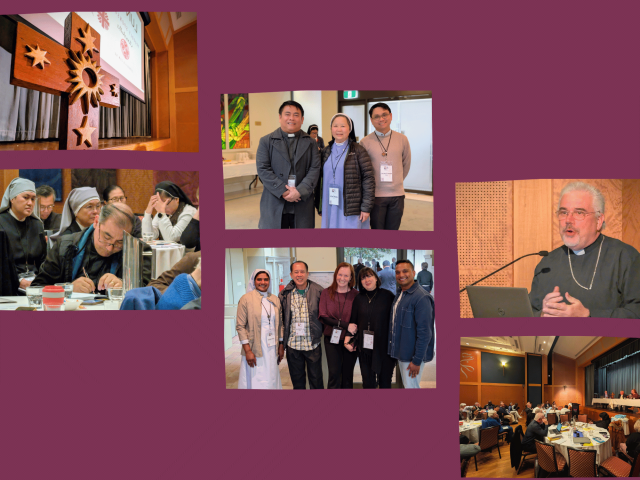
Fr Khalid Marogi, ACMRO National Director, said the conference reaffirmed the Church's commitment to fostering a culture of encounter and accompaniment.
"The conversations and reflections shared throughout these two days have inspired us to continue building communities where every person feels welcomed, valued and able to contribute their gifts. Through listening to one another and journeying together, we become more effective witnesses to the Gospel."
Fr Marogi, thanked speakers, delegates and organisers for making the event a success.
As participants return to their dioceses, parishes and communities, the spirit of the conference continues in a shared commitment to building a Church where cultural diversity is recognised and celebrated as a gift, and where all people can find a place of belonging, participation and hope.
09 July 2026
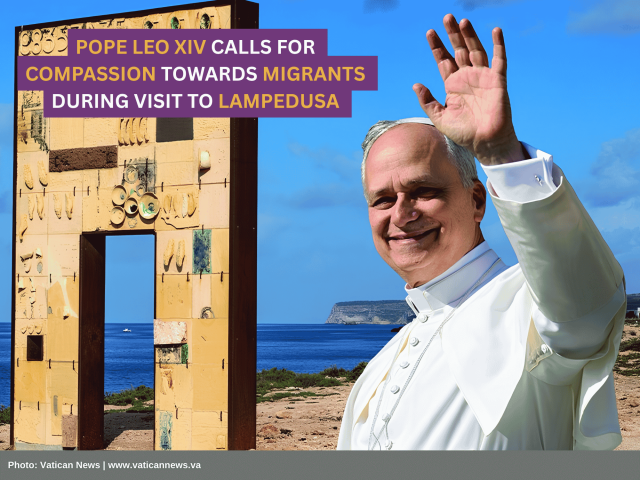
Pope Leo XIV has used a visit to the Mediterranean island of Lampedusa to urge Christians and people of goodwill to show greater compassion towards migrants and refugees, warning against indifference to human suffering.
The visit carried particular significance as Lampedusa, located between Italy and North Africa, has become one of Europe's most prominent arrival points for migrants seeking safety and a better future. The island was also the destination of Pope Francis's first pastoral journey in 2013, a milestone that Pope Leo recalled during Mass celebrated before local residents.
The Pope's message touches on issues familiar within Australian public debate. While Australia's migration challenges differ from those facing Europe, questions surrounding asylum seekers, border policies and humanitarian responsibility have long been topics of discussion in public life.
Reflecting on the Gospel parable of the Good Samaritan, Pope Leo drew a direct connection between the biblical story and the experiences of migrants risking dangerous journeys across the Mediterranean.
"Here you have seen not just one, but thousands of human beings fallen into the hands of robbers who have taken everything from them, beat them brutally, and walked away, leaving them half-dead," the Pope said.
The Pope added: "Those who have lost their lives in this sea are victims both of decisions that were made and of decisions that were not made."
Pope Leo highlighted a range of factors contributing to forced migration, including poverty, corruption, armed conflict, organised crime, people-smuggling networks and economic systems that leave many communities excluded from opportunity.
Opening his homily, Pope Leo thanked the people of Lampedusa for their hospitality and acknowledged their ongoing efforts to assist those arriving on the island's shores.
"God always loves us first," he said. "The beauty of the sea, this island and your faces is a reflection of his gratuitous initiative. I am grateful to the Lord for the opportunity to visit you, following in the footsteps of Pope Francis."
Concluding his visit, Pope Leo reflected on an image of Our Lady of Safe Harbour, patroness of Lampedusa, drawing on Saint Augustine's description of life as a voyage across a stormy sea in search of a secure harbour.
"In God we all have a safe haven," he said. "Every Christian community is called to be a reflection of it on earth."
Ending his remarks with the traditional local greeting "O'scià!", Pope Leo thanked island residents for their generosity and witness, praising their continued commitment to welcoming those in need.
09 June 2026
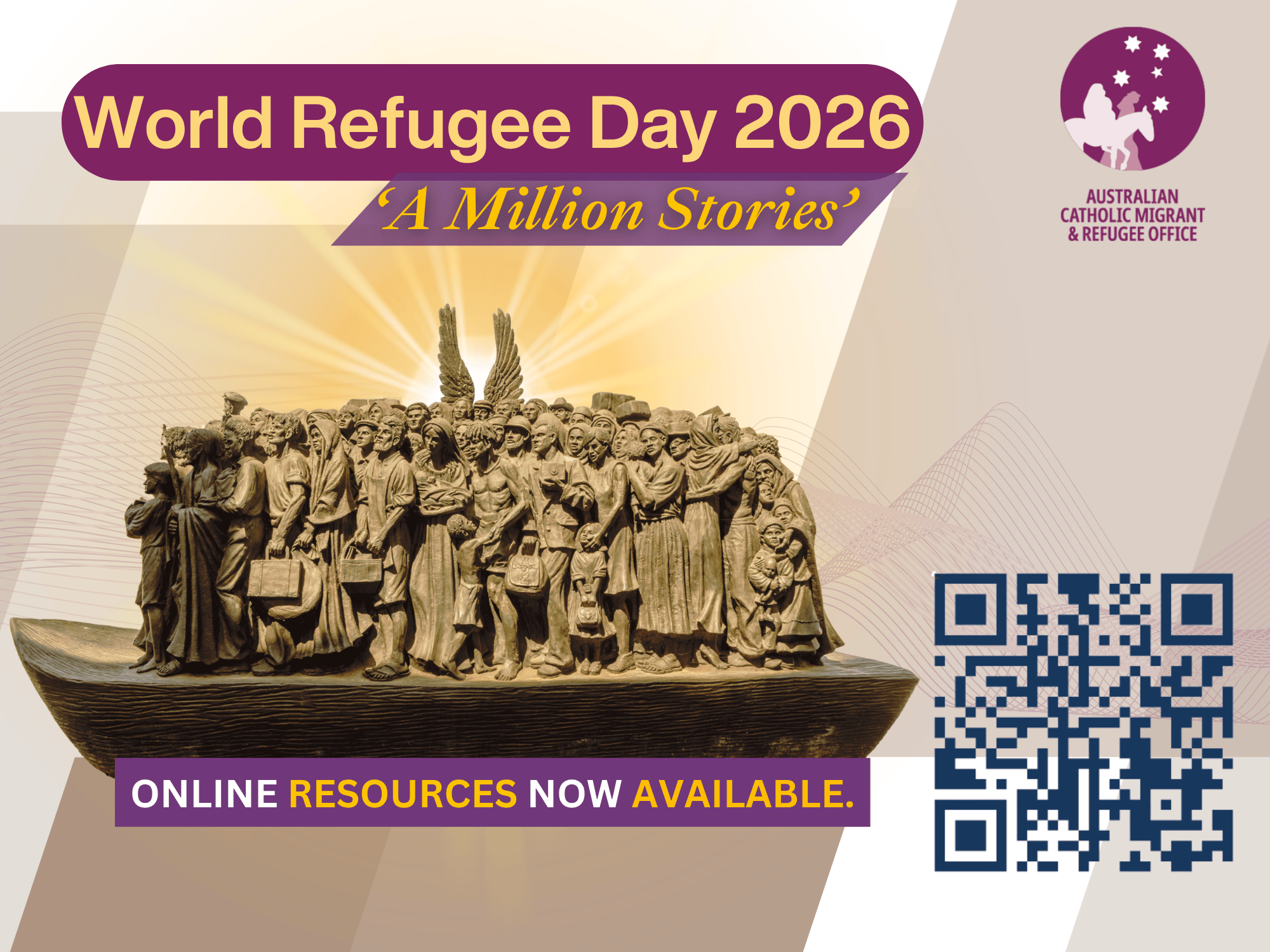
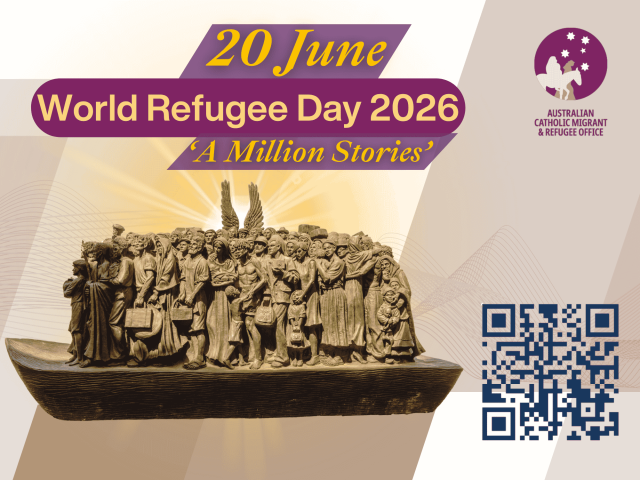
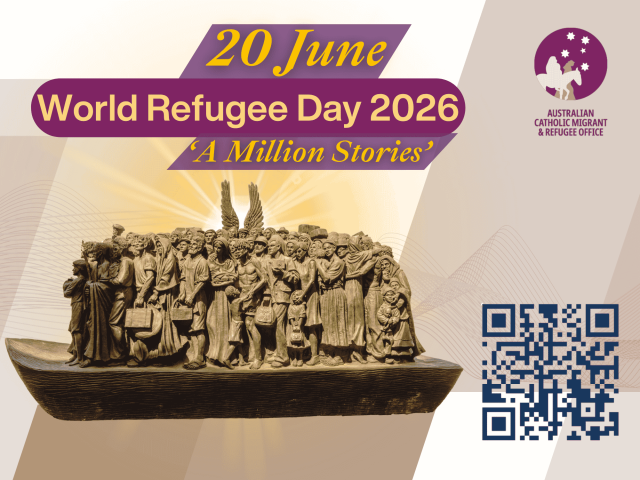
As the global community prepares to mark World Refugee Day, Australia is reflecting on a powerful milestone: one million permanent humanitarian visas granted since 1947, each representing a unique journey of resilience, survival and hope.
The Australian Catholic Migrant and Refugee Office (ACMRO) has joined international efforts to recognise the courage of people forced to flee their homes, while highlighting Australia’s long-standing role in offering refuge and rebuilding lives.
Drawing on both history and faith, ACMRO’s World Refugee Day reflection connects today refugee and people seeking asylum experiences with stories deeply rooted in scripture. Figures such as Abram and Sarai, who fled famine and later became the forebears of many nations, and Hagar, cast into the wilderness yet sustained by divine care, echo the struggles faced by displaced people today.
Similarly, the story of Moses, born into oppression and called to lead his people to freedom. And the flight of Joseph and Mary to Egypt to protect the infant Jesus, are presented as timeless examples of forced migration in search of safety and dignity. These are not just ancient stories. They remind us that the search for refuge, safety and hope is part of the human story, and our faith calls us to honour every person and every journey.
A National Milestone
This year’s observance holds particular significance in Australia. Since the aftermath of World War II, when millions were displaced across Europe, Australia answered the global call for resettlement. Beginning in 1947, the nation has since granted one million humanitarian visas, providing new beginnings for generations of refugees.
Each visa represents more than a number, it marks the rebuilding of lives, families and communities in a country far from home.
Church’s Ongoing Role
The Catholic Church in Australia has played a consistent role in welcoming and supporting migrants and refugees throughout this period. Since the late 1940s, Church agencies, parishes and schools have helped new arrivals settle, integrate and thrive in their adopted communities.
This commitment has been reinforced through decades of official teaching and advocacy. Key documents include:
• Pastoral Letter on Immigration (1950), issued by Australian bishops in the early post-war years
• For Those Who’ve Come Across the Seas, the Australian Catholic Bishops’ Social Justice Statement (2015–2016)
• What the Catholic Church Teaches on Asylum and Migration, published by ACMRO
• Commemorating the 75th Anniversary of the 1950 Pastoral Letter On Immigration - Under the Southern Cross: A Journey of Faith and Unity
Together, these statements reflect a sustained moral call to uphold the dignity and rights of those seeking refuge.
Resources for Communities
To support the 2026 World Refugee Day observance, ACMRO has published online resources for parishes, schools and Catholic organisations. These include liturgical materials, homily notes, prayers of intercession and bulletin inserts designed to help communities engage meaningfully with the day.
The resources aim to deepen understanding, encourage reflection and inspire action in support of refugees both in Australia and globally.
A Shared Responsibility
As conflicts, climate pressures and social instability continue to displace millions worldwide, World Refugee Day serves as both a moment of remembrance and a call to action. In marking one million humanitarian arrivals, Australia is not only commemorating its past but also renewing its commitment to compassion and hospitality. “Every refugee carries a story,” for the Catholic Church “To recognise them is to recognise our shared humanity, and to respond with justice, dignity and hope.”
With acknowledgement and thanks to CathNews, where this article originally appeared.